
Task Force Legion systems · Public beta
TFL - Dynamic Concealment
Camouflage should matter.
A terrain-first AI visibility system for Arma 3. Your worn uniform profile, terrain, vegetation, stance, movement, weather and recent weapon fire influence how easily AI can detect you.
Field guide
See it in action. Know what matters.
Explore Dynamic Concealment in action, then review the key factors that determine how visible a unit is to AI.
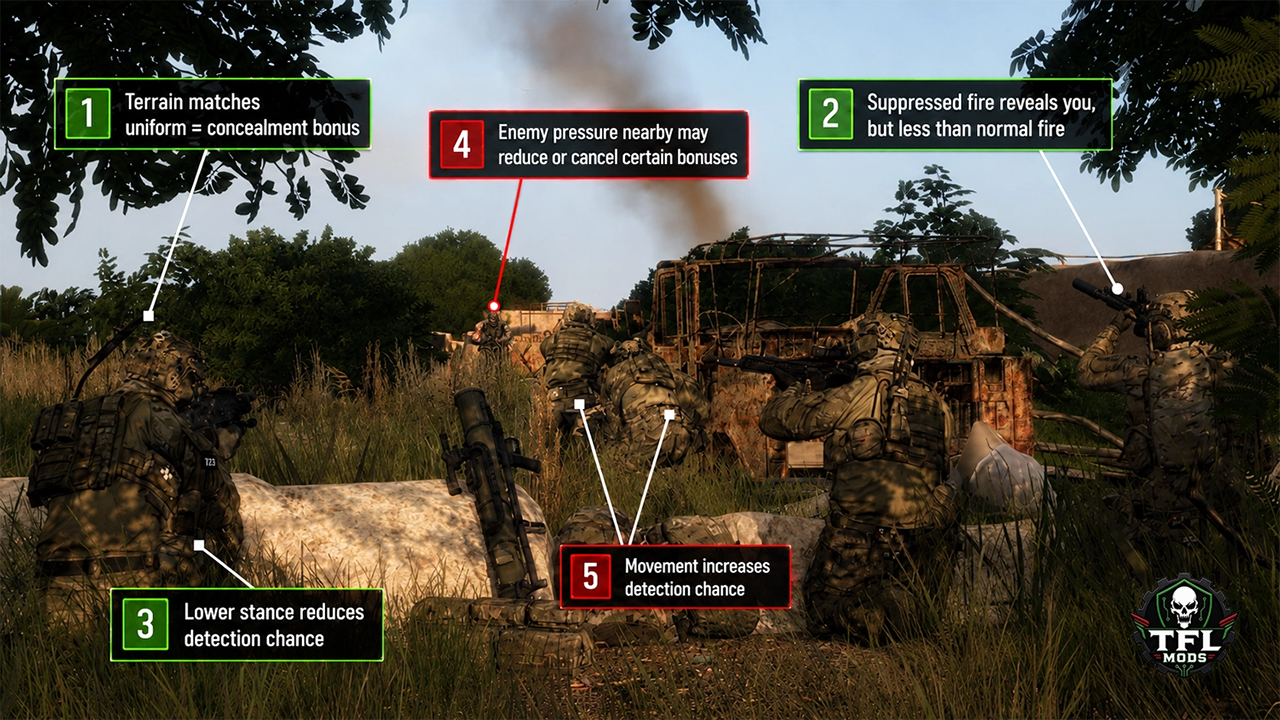
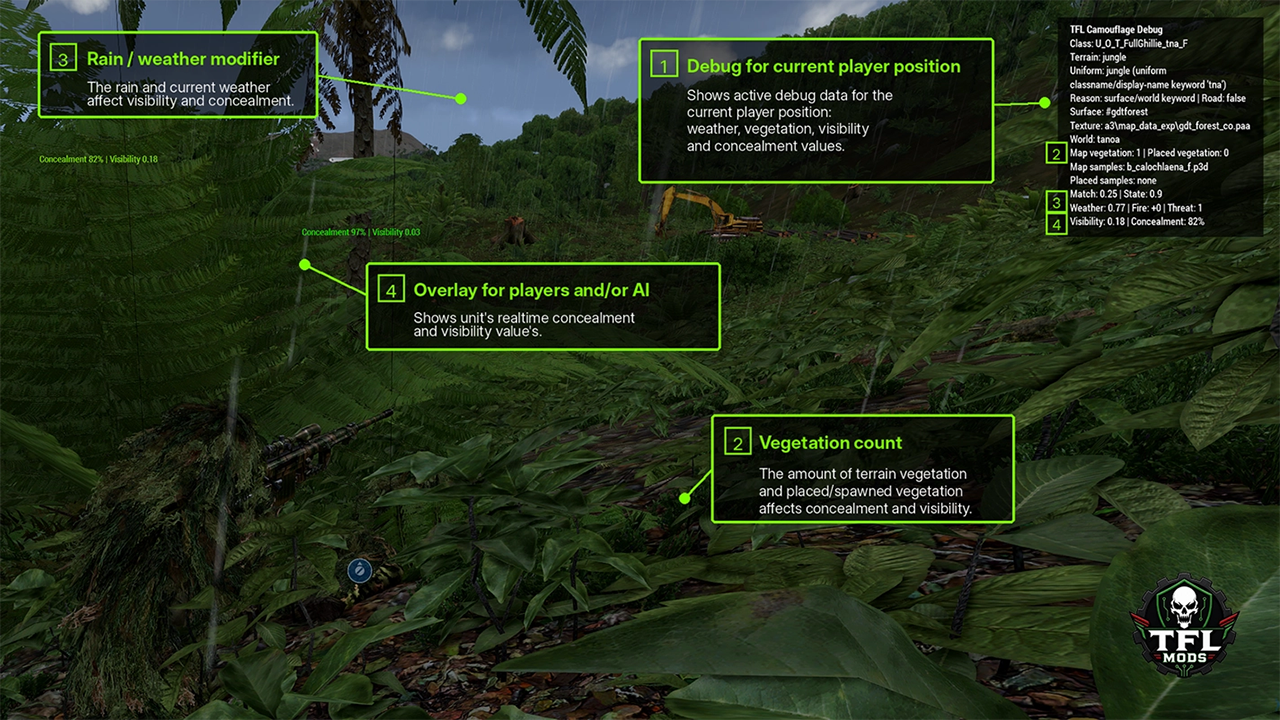
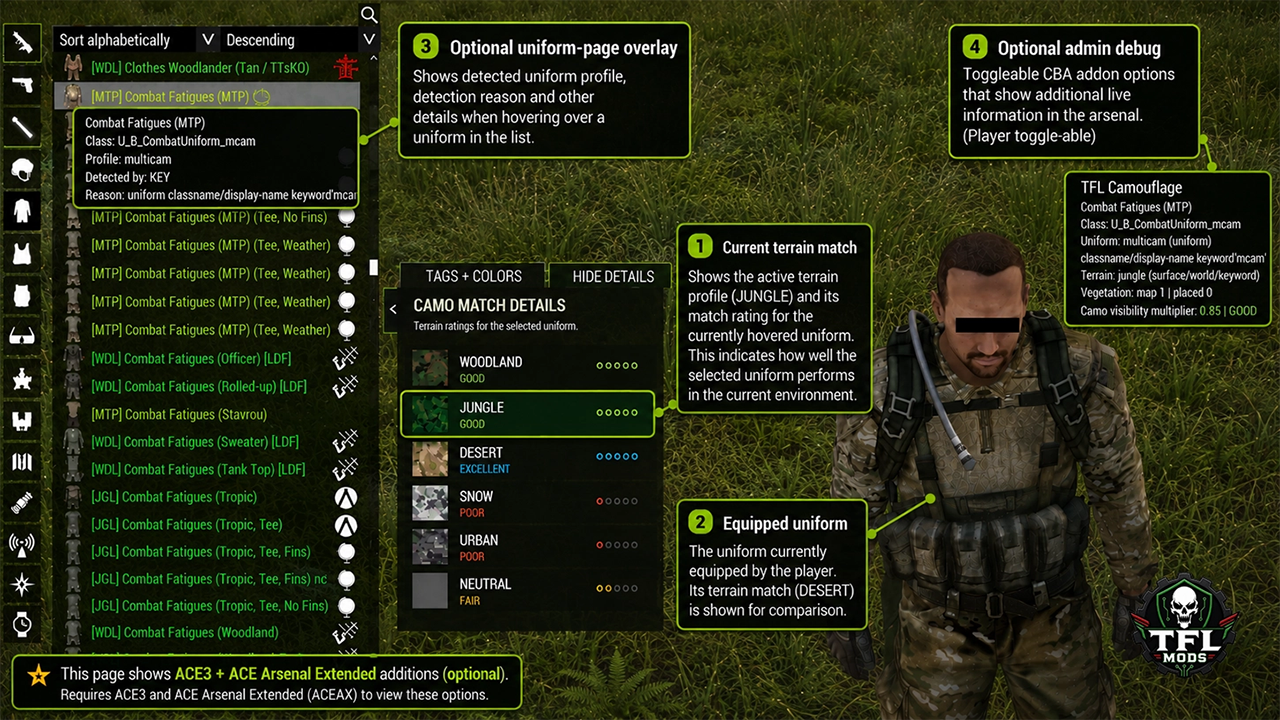
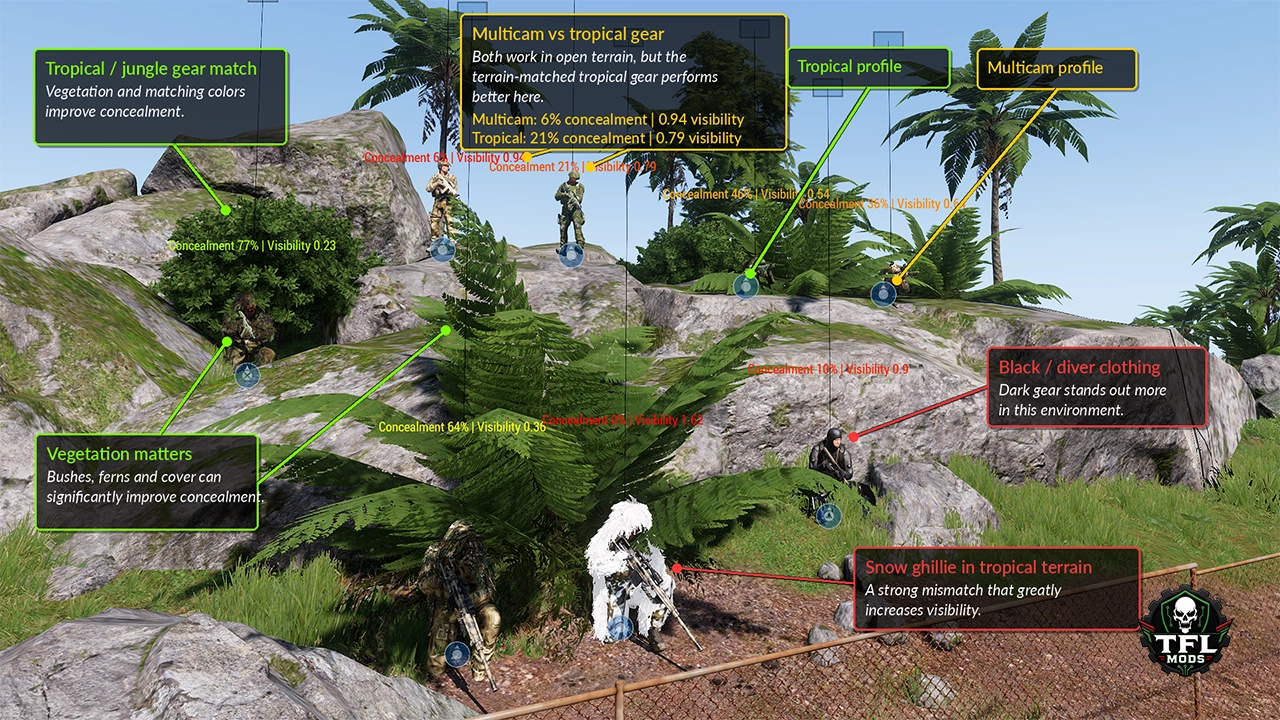
Terrain match
Roads, urban areas, woodland, jungle, desert and snow are detected to establish the environment baseline.
Uniform, not inventory
The worn uniform profile and Bright or Dark modifier matter. Carried gear does not affect concealment. Version 0.8.3 includes 7,684 classified uniform classnames.
Exposure changes
Vegetation, stance, movement, weather, lighting and nearby-enemy pressure continuously modify visibility.
Fire reveals
Recent suppressed, unsuppressed and launcher fire adds a configurable visibility penalty. Ghillie suitability is evaluated separately.
How it works
One native trait. Several inputs.
The detected environment is compared with the unit’s worn uniform profile. Carried inventory is not evaluated.
Nearby vegetation can provide layered cover, while roads increase exposure.
Stance, movement, weather, lighting and Bright or Dark appearance modifiers adjust visibility.
Nearby enemies, recent weapon fire and ghillie suitability complete the calculation.
Deployment profile
Native, local and compatible.
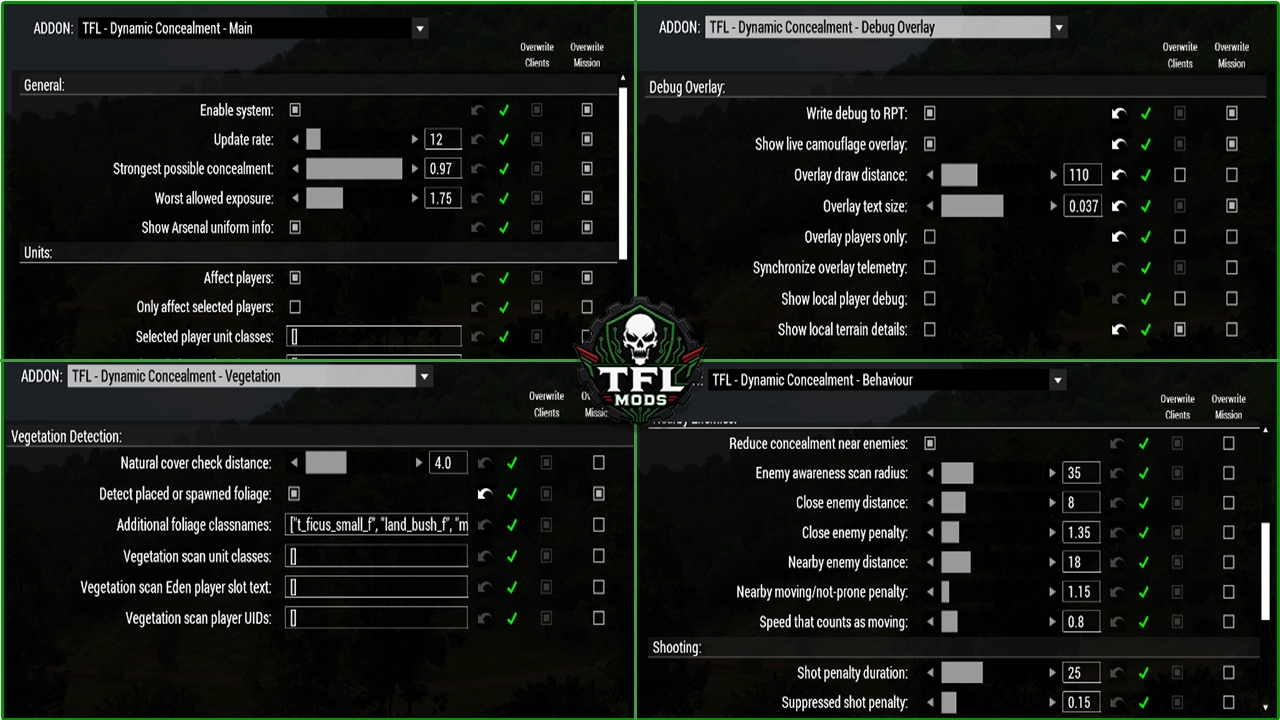
Dynamic Concealment adjusts Arma’s native camouflageCoef on the machine that owns each unit. Clients handle their player; the server or headless client handles its local AI. It works alongside LAMBS, VCOM and similar behaviour mods.
- Requirement
- CBA_A3
- Default scope
- Players + playable AI
- Update rate
- 12 per minute
- Uniform coverage
- 7,684 classified
- AI architecture
- No behaviour rewrite
Recommended baseline
Conservative defaults for co-op.
Performance and optimisation
Lightweight by default. Scalable when needed.
The default configuration is deliberately conservative for organised co-op. Expand scope only when the mission requires it, and keep diagnostic work out of normal play.
- Leave all-AI scope disabledEnable it only when non-playable AI must receive concealment updates.
- Keep placed-foliage scans offUse them only when editor-placed vegetation must count as cover.
- Use selected-player scopeLimit processing to exact roles, classnames or Steam UIDs for specialist missions.
- Reduce the update rate when neededTwelve updates per minute is the default; large operations can run lower.
- Disable debug overlays and syncEnable telemetry only while diagnosing or tuning the system.